FAQ
Ramen ticket machines and izakaya bills: common questions
Short answers before you go. Every shop runs its machine, menu and charges its own way, so follow the signs and staff on the day.
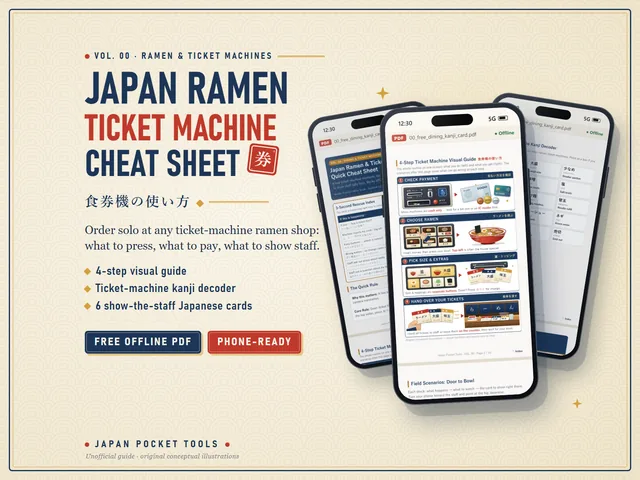
Do I buy a ramen ticket before lining up or after?
In most ramen shops you buy a meal ticket from the shokkenki machine first, then join the line or hand the ticket to staff when asked. Some busy shops have you line up first and buy when you reach the front, so follow the queue and signs. Have cash ready before you enter, choose quickly, and take your change and ticket.
What should I do if the ticket machine does not accept a 10,000-yen bill or new bills?
If the machine rejects a 10,000-yen bill, an older bill, or a new bill, check the bill-slot sign first, as many machines accept only 1,000-yen bills and coins. Ask staff to break the bill, pay at the counter if allowed, or use a convenience store nearby to get smaller notes. Do not hold up the line while searching for change; step aside and let others pass.
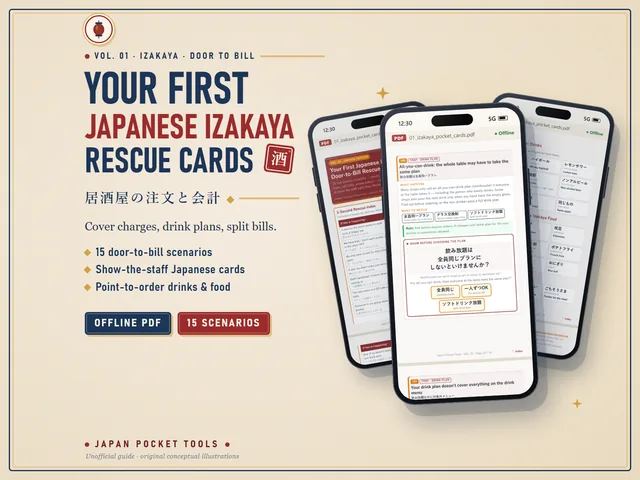
Can I refuse otoshi at an izakaya and do I need to tip?
Otoshi is a small appetizer served automatically at many izakaya when you sit down, and a per-person charge is added to the bill. It is usually treated as a seat charge and is hard to refuse once served, although you can ask before ordering if you have allergies. Tipping is not expected in Japan, so do not leave cash on the table.
How does nomihodai all-you-can-drink work and when is last order?
Nomihodai is a fixed-price all-you-can-drink plan, usually for 90 or 120 minutes, with a limited drink menu. Last order is typically 15 to 30 minutes before the time ends, everyone at the table often must join, and a two-drink or food-order rule may apply. Empty your glass before ordering the next drink at some shops, and check the sign for details.
Why is my izakaya bill higher than the menu total?
Your bill can be higher than the menu total for several normal reasons. Consumption tax is 10 percent for dining in, otoshi is added per person, some izakaya require one drink per person, and late-night charges may apply after a set time. Prices on the menu may be shown before tax, so check whether the menu says tax-included or tax-excluded.
How do I pay and split the bill at an izakaya?
At an izakaya you usually pay at the register on the way out, not at the table. Bring the bill slip from your table, and pay by cash or card depending on the shop. Splitting evenly is common in Japan, and many registers cannot split by item, so settle differences among yourselves. Check otoshi, drinks, and late-night charges before you pay.